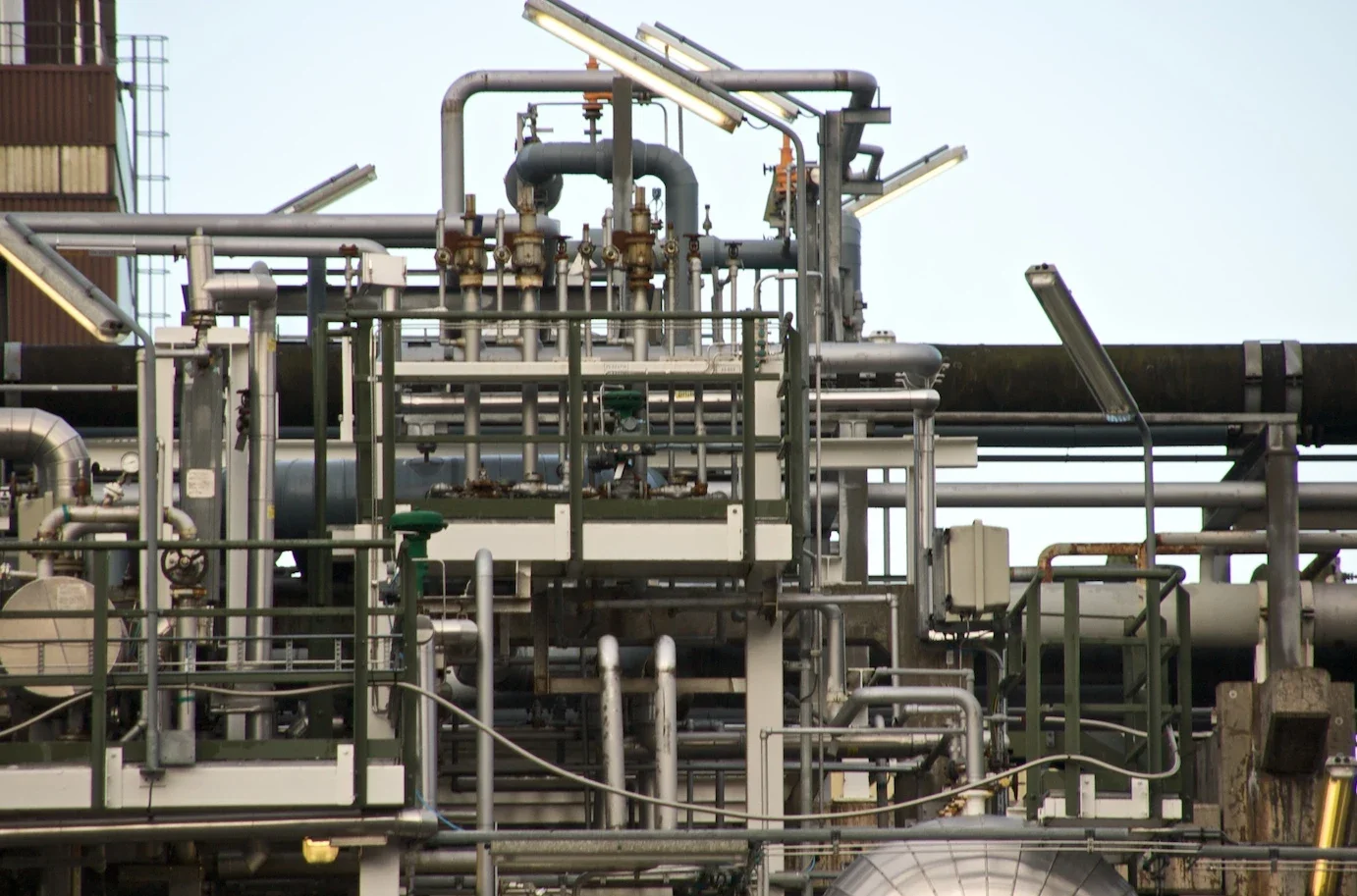
Engineering begins with understanding.
Effective infrastructure is not created by selecting technologies alone. It begins by understanding the territory in which those technologies must operate.
Every municipality, region and industrial landscape presents its own combination of material streams, infrastructure, regulatory frameworks, environmental conditions, industrial demand, logistics and community expectations. Engineering without understanding risks solving the wrong problem.
GCCEG’s stated role is technology-independent engineering and systems integration, with operating responsibilities defined for each project. Territorial Intelligence establishes the design basis for each application, allowing infrastructure solutions to emerge from disciplined understanding rather than assumption.
Technology therefore follows understanding. GCCEG selects and integrates the most appropriate commercially available engineering, technologies and components for the material stream, territory, intended outputs and required operating conditions.
No individual reactor or technology defines the complete facility.
The Engineering Authority
GCCEG assumes responsibility for the architecture of the complete system: feedstock preparation, process-line configuration, mass and energy balance, emissions control, utilities, automation, recovered-product treatment, logistics, offtake, maintenance and long-term operation.
Technology suppliers and reactor manufacturers may provide important subsystems. GCCEG evaluates them according to the role they actually perform within the project chain and integrates selected components into infrastructure whose performance must be judged as a whole.
Technology Independence
Technology independence allows GCCEG to select the best commercially available engineering, technologies and components for each application rather than adapting every territory to a predetermined platform.
Selection is governed by suitability, verified performance, integration requirements, regulatory obligations and intended product quality. Technology independence does not permit compromise. Safety, reliability, environmental performance and product quality remain controlling engineering requirements.
Advanced Pyrolysis within the System
Advanced continuous pyrolysis may form a central conversion stage where dedicated carbon-based material streams and territorial conditions provide a responsible basis for its use.
Pyrolysis is a controlled thermal conversion process conducted in oxygen-free or near oxygen-free conditions. Unlike direct combustion, it converts suitable materials into recoverable gaseous, liquid and solid products that may support further industrial use.
The reactor remains one subsystem within the complete facility. Its value depends upon the engineering quality of everything connected to it.
Dedicated-Feedstock Engineering
GCCEG does not treat different material streams as interchangeable inputs.
Plastics, Rubber and Tyres, Biomass and Bio-Organics are assessed separately. Medical Waste is a separately controlled specialist stream; treatment eligibility depends on waste class, public-health requirements and the applicable authorisations. Each process line must follow a characterised, dedicated feedstock and an appropriate treatment route.
Dedicated-feedstock discipline supports stable process control, consistent recovered-product quality, reliable emissions performance and more defensible operating economics.
Engineering Continuous Recovery
Continuous operation is an engineering decision intended to maintain thermal stability, reduce repeated heating and cooling cycles, improve energy utilisation and support consistent process performance.
Stable operating conditions can improve predictability, equipment utilisation, process control and product consistency. Continuous operation must nevertheless be supported by appropriate material preparation, maintenance philosophy, redundancy, automation and operator discipline.
Modular Infrastructure
The module architecture described here combines two machines with stated nominal ratings of 25 tonnes per day each, giving a combined nominal rating of 50 tonnes per day. Actual throughput must be established for the specified feedstock, preparation, operating hours and maintenance regime; the nominal rating is not evidence of sustained plant performance. Expansion follows qualified need and verified operating performance.
Process Engineering
Effective pyrolysis depends upon feed preparation, residence time, controlled atmosphere, thermal management, material handling and intelligent process control.
Temperature, residence time, pressure and reactor atmosphere must be selected for the specific material, intended products and validated equipment configuration. General literature values should not be presented as GCCEG operating specifications.
Systems Integration
GCCEG integrates the complete relationship between:
feedstock reception, characterisation and preparation
conversion technology and process-line configuration
mass and energy balance
gas cleaning and emissions control
process monitoring and automation
recovered-product upgrading and specification
industrial use and product offtake
utilities, site infrastructure and logistics
maintenance, reliability and safe operation
A technically capable subsystem cannot compensate for unresolved interfaces. Complete-system performance is the engineering responsibility.
Intelligent Process Control
Advanced monitoring may oversee temperature, material flow, residence time, process pressure, gas composition, emissions and energy balance throughout the recovery cycle.
Instrumentation and control are not decorative additions. They provide the evidence required to maintain stable operation, protect equipment, verify environmental performance and support consistent product quality.
Recovering Valuable Resources
Depending upon feedstock, process configuration and product treatment, recovered outputs may include process gas, liquid hydrocarbons, recovered carbon materials, industrial heat and other usable energy streams.
The existence of an output does not automatically establish its value. Product quality, treatment requirements, regulatory status, industrial specification and confirmed offtake determine whether recovered material becomes a responsible commercial product.
Energy Integration
Recovered process gases and energy streams may be reused within the facility where technically and environmentally appropriate.
The objective is a disciplined energy balance that reduces unnecessary external fuel demand while preserving process stability, emissions performance and product quality.
Environmental and Public-Health Performance
GCCEG accepts no compromise to environmental performance.
Environmental performance must be demonstrated for the complete facility through pollutant-specific measurements, defined reference conditions and an account of normal and abnormal operation. Enclosure, pressure management and gas treatment are controls, not evidence of negligible emissions.
Responsible infrastructure should reduce burdens rather than transfer them. Its contribution to healthier communities depends upon the actual conditions it creates, the burdens it avoids and the evidence produced during operation.
Reliability and Product Quality
Infrastructure intended to serve municipalities, regions and industry must perform consistently.
Reliability is shaped by equipment selection, redundancy, maintainability, operating discipline, spare-parts strategy, process control and lifecycle stewardship. Product quality is shaped by feedstock discipline, stable operating conditions, appropriate upgrading and verified specifications.
Neither can be treated as an afterthought.
Engineering with Purpose
Technology provides capability. Engineering determines how that capability is selected, integrated and held accountable.
GCCEG combines Territorial Intelligence, technology independence, systems integration and project-defined operational responsibility to develop complete circular carbon and energy recovery infrastructure.
The objective is not to promote a particular reactor or technology platform.
The objective is to engineer the appropriate system for the territory, operate it responsibly and demonstrate performance without compromise to safety, reliability, environmental performance or product quality.
Supporting references
[S1] IEA Bioenergy Task 34. Pyrolysis Principles. Accessed 7 October 2026. https://task34.ieabioenergy.com/pyrolysis-principles/
[S2] US Energy Information Administration. Biomass explained. Accessed 7 October 2026. https://www.eia.gov/energyexplained/biomass/
[S5] European Commission Joint Research Centre. Waste Incineration BREF scope. Accessed 7 October 2026. https://bureau-industrial-transformation.jrc.ec.europa.eu/reference/waste-incineration-0
[S13] World Health Organization. Health care waste. Accessed 7 October 2026. https://www.who.int/news-room/fact-sheets/detail/health-care-waste